
Where Data Meets Purpose: AIT Students Discover NGO Opportunities at Bangkok

By: Neha Sarraf
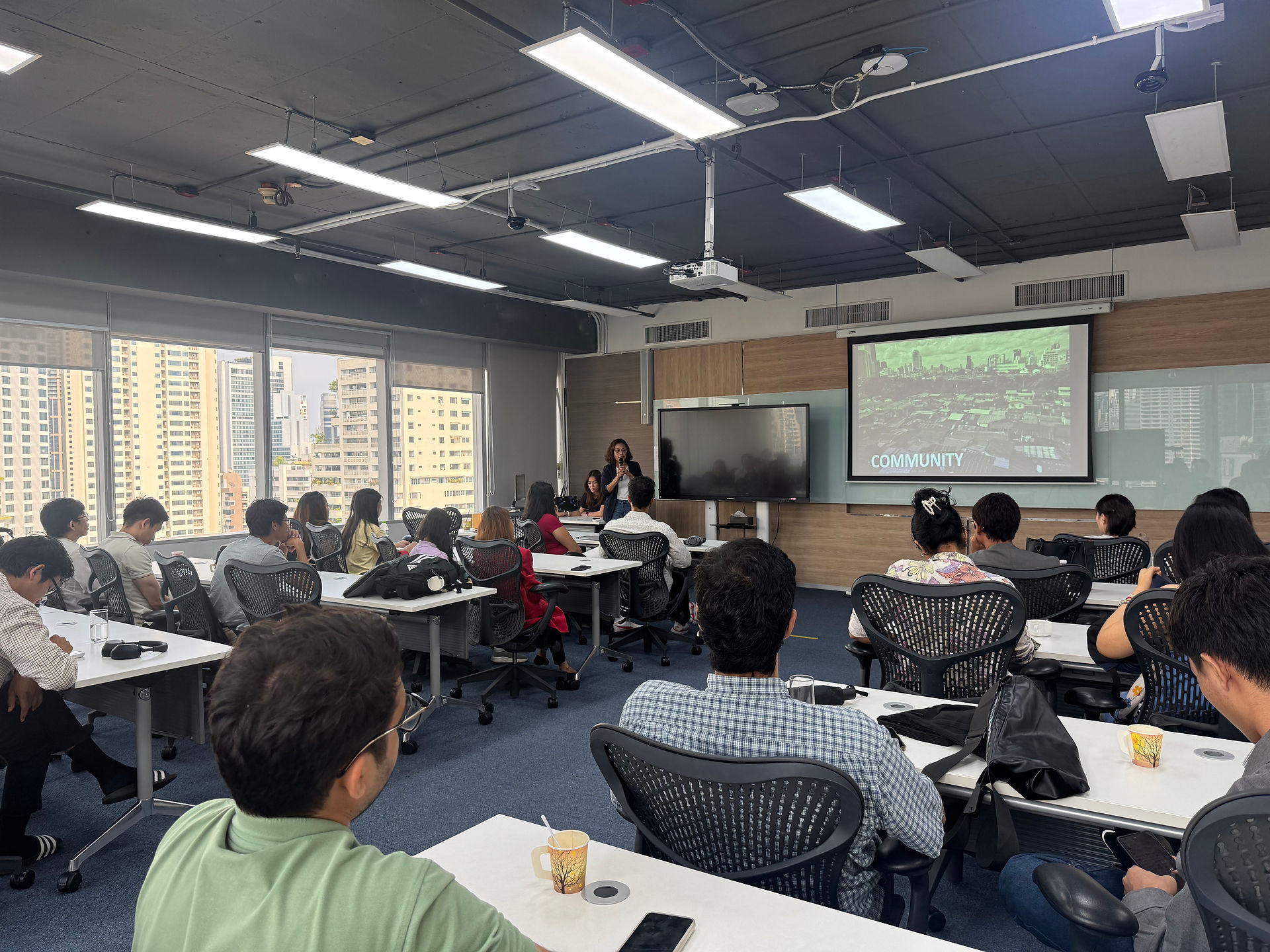
I took a break from the familiar flow of data and went to a wonderful presentation at AIT on Thursday afternoon. Three Bangkok-based organizations: Rotaract Club, Mirror Foundation, and Second Chance Bangkok came to AIT to show graduate students that business analytics skills have a life far beyond spreadsheets.
It was an enlightening and inspiring experience with some dynamic presentations and even livelier
questions; there was informal coffee networking with collection boxes hidden in plain sight.



Rotaract Club (Road Trap): Community Service with a Professional Edge
Rotaract is the young professional’s section of Rotary International, and AIT's Rotaract club, which was chartered in February 2024 and is sponsored by the Rotary Club of Bangkok already consists of over 20 members who were selected in equal proportion from both School of Management, Schools of Engineering and Science.
The club focuses on three main areas: community services, leadership training and networking. By
cooperating with iCare Thailand Foundation, club members fund school at border areas with educational sponsorship (500 Baht for one primary student per month and 6,000 Baht for one student per year, dorm construction, and water provision for schools.
The meetings are held monthly on the first Wednesday and have both physical and online formats
available. Membership fees of 100baht per month - 30% for administration, 70% for community projects - will also be very affordable for most students.
Volunteering lets you apply classroom knowledge to real problems — and build valuable networks and references.
Mirror Foundation: 35 years of restoring dignity through innovation
Established in 1991, Mirror Foundation has been actively involved with the synergy of social
development and workable innovation for 35 years now with its offices in Bangkok and Chiang Mai. It is engaged in the following three areas of work: creating people, creating innovation and creating change. Their numbers are striking over one million Facebook followers, more than 900 volunteer cases supported, 257 homeless, elderly, and people with mental health conditions helped into employment, and around 20,000 volunteers mobilized every year through their city volunteering program.
Among their flagship initiatives is the Tiny Project, which pays homeless individuals 500 baht a day to manage donated food, a program built explicitly around restoring dignity alongside income. They operate Thailand's only and first Missing Person Saha Center, a legal clinic assisting non-citizens and underserved populations, a program for redistribution of medical supplies (such as oxygen machines) and a computer rehabilitation program that sends refurbished hardware to schools lacking sufficient equipment.
The Mirror Foundation continues its work using a social enterprise model. 30% of all donations go to people that require support for free and 70% is sold and profits help to support the organization. Anguin Sky is an open coffee shop for everyone where also social inclusion is supported. Corporate volunteers from companies including Microsoft, IBM, Gucci, and AirAsia have worked alongside the foundation — a signal of the kind of professional networks available to engaged students.
Second Chance Bangkok: hope in Klong Toey
Klong Toey community one of Bangkok's largest and most densely populated slum areas, home to over 100,000 residents. The organization is completely self-funded via profits from its secondhand shop, a truly self-reliant community cornerstone.
The organization's best program is the upcycling one where five grandmas take donated garments and turn them into products. It is a silent but incredible business model, the ladies receive income and gain skills, as well as confidence and purpose.
Staffed by 16 employees (most of them are residents of the community), Second Chance also coordinates with children from the slum through the "Kids Hub program" which involves a monthly trip with those children and helps asylum seekers and refugees deal with a particularly challenging legal and social environment.
In the end, the session had proven that INGO and NGO do not only mean charitable works, but they contribute much more to society than we realize. As exemplified through the Rotaract Club, Mirror Foundation, and Second Chance Bangkok, they have illustrated that sustainable change happens not merely by offering compassion but also integrating it with persistent effort and long-term strategy.
Organizations, such as Rotaract Club and Mirror Foundation for example, achieve social welfare through the sponsorship of education, creation of jobs, re-distributing health service resources, providing refugee support, community empowerment and emotional assistance, whereby giving not only materials to poor but human dignity as well. Not only helping the poor at personal level but these organizations have indeed made the Thai society be able to recover from challenges, integrate and become a responsible nation. Empowerment through knowledge, confidence, opportunity and support have made these organizations the link that connects the economy to social development, showing that economic development is not sustainable if any part of society is not included.


